
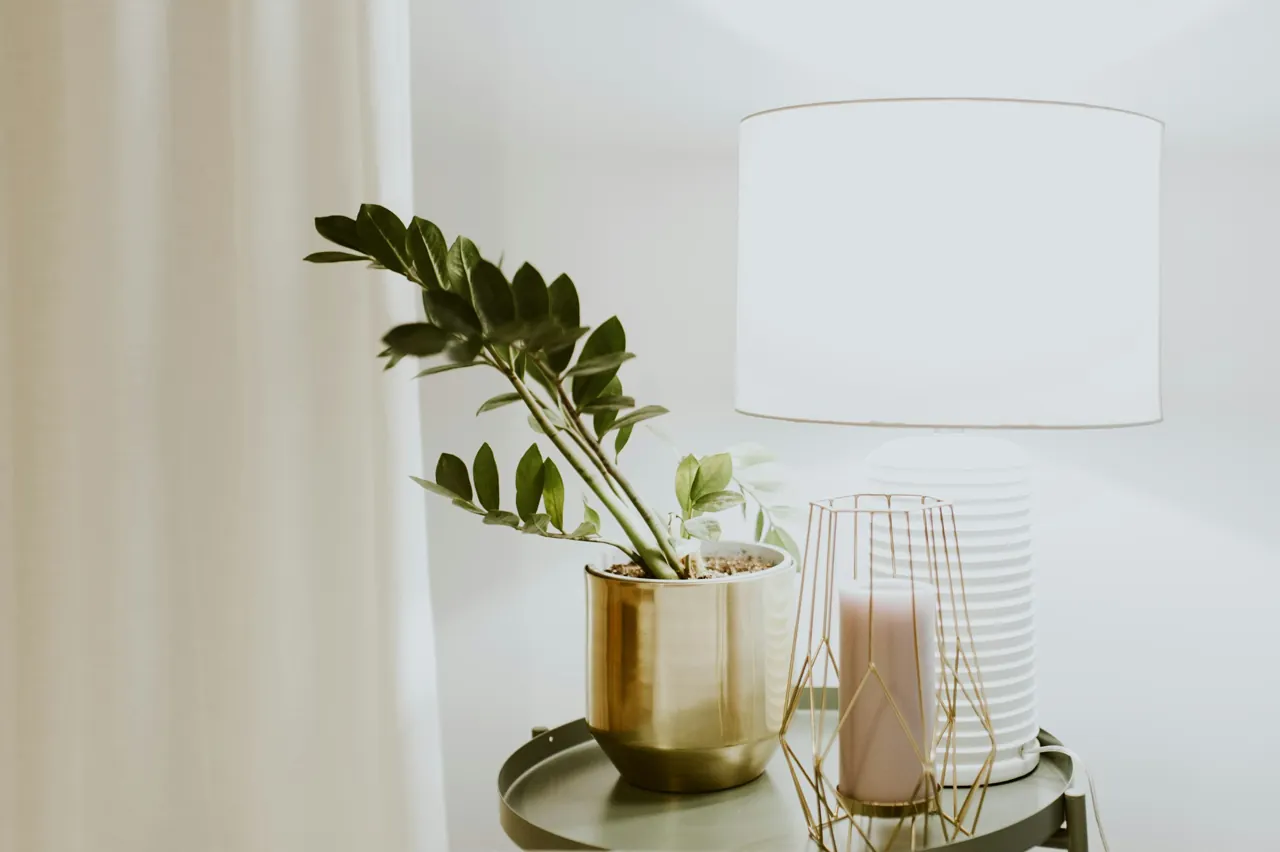
Begin with daylight and the room
Notice when direct sunlight enters and how the room is used after dark. Windows, curtains, wall colour and reflective finishes all affect how bright a space feels. Look at material samples in the actual room when possible: a pale finish can read differently under morning daylight and warm evening lamps. Record where glare falls on a screen, mirror or glossy surface. This simple observation gives the lighting plan context before any fixture is chosen.
Use ambient light for general orientation
Ambient light is the broad, comfortable illumination that helps people move through and use a room. It can come from ceiling fixtures, concealed sources or a combination of fittings. The right arrangement depends on the ceiling, room proportions and activities; there is no universal fixture count that fits every home. Aim for even enough coverage for ordinary use while avoiding a harsh pool of light directly overhead.
Plan task light where work happens
Task lighting supports a specific activity: reading, food preparation, grooming or focused desk work. Decide where that activity will happen, then coordinate the light with the furniture and work surface. In a kitchen, check where the person stands and whether upper cabinets cast a shadow over the counter. Beside a bed, consider whether one person needs to read while another rests. Switch placement and glare control matter as much as the fixture itself.
Use accent light with restraint
Accent light draws attention to a surface, artwork, niche or architectural detail. It can add depth, but too many competing highlights make a room feel restless. Choose one or two features that deserve attention and check how they look from the main seating and circulation routes. Concealed lighting should be planned with access for maintenance and a clear understanding of what it will illuminate. A strip light that is visible from every angle may distract more than it helps.
Coordinate the layers before installation
Review the furniture plan, ceiling design, switch locations and finish samples together. Consider how lights will be controlled in scenes for cooking, working, entertaining and winding down. Electrical loads, wiring and installation should be checked by qualified professionals against the actual property conditions and applicable requirements. A design image can communicate atmosphere, but it does not specify a circuit, fixture rating or safe installation detail.
What are ambient, task and accent lighting?
Ambient lighting provides general room illumination; task lighting supports an activity such as reading or cooking; accent lighting highlights a chosen feature. A well-planned room may use all three, arranged around how people move and work rather than a fixed number of fixtures.
A project to study: Babbar Residency
Babbar Residency in Sector 125, Mohali, documents a 3BHK home with custom woodwork, a feature wall and ceiling lighting. View its project photographs to see how the studio’s chosen light and finishes appear together. Those images show a particular completed space; they do not establish the electrical specification or fixture quantity for another home. Use them as a conversation reference, then plan your room from its own layout and site conditions.